
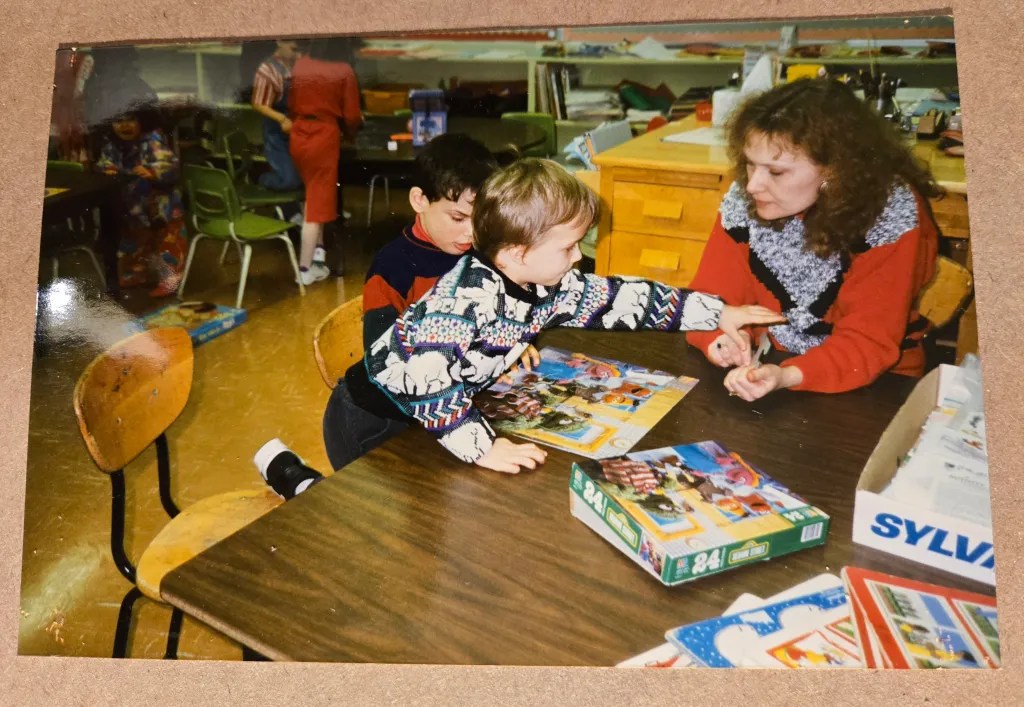
Yes, that’s me judging from the permed curly big hair 30 plus years ago teaching in my classroom. I have written on this important topic several times already because listening and comprehension in all aspects of life is a vital skill. I even wrote my Master’s Degree thesis on this issue many years ago. Sometimes I still ask myself as a parent should I have been better at practicing what I preached at school where teaching and expecting good listening skills was an everyday assumption and goal. How many times did I frustrate or disappoint one of my own children during a conversation maybe missing the point or an opportunity to comfort or mentor them better as they grew up. I’m not losing sleep or crying over spilt milk but there really are ways to be a better listener.
Modeling good listening skills is even more important today than it was during my parenting years. Studies are already showing that student school performance and achievement scores are lower now than in previous generations and we don’t need to think to hard to explain what advances in and the distractive and addictive nature of technology may have a lot to do with that. In this busy, distracting and multitasking environment that we all live in perhaps parents could start by pausing and being present in that precious moment when they are interacting and communicating with you. Focus on your child so that you can listen to what they are really saying and meaning.
I’d like to retell my story of finding concerning words written many years ago in my nineteen-ninety something journal. I had written that one of my daughters had said to me “Something is bothering me, Mom. You haven’t been listening to me lately.” Ouch that still hurts to read today. She goes on to say “You haven’t been paying attention to me. That’s why I act silly.” Amazingly accurate insights for a 4 year old and perhaps a fair assessment of my challenging overworked days of motherhood. We are all guilty of it. We spend time with loved ones but are we really listening in the present to what they need? Obviously there is much more mental health context to that story but I want to stick to the point that we can all learn to be better listeners.
Back in my school classrooms I always had a prominent poster hanging on the wall that wisely said “ Learn to Listen. Listen to Learn.” I have to admit that I sometimes am still not the best listener. I use to blame it on my profession as a teacher where it was my job to talk all day long to making a living. But, that was just an excuse for not respecting that conversations especially in our personal lives are two way streets that require listening too. We spend more time in life listening than any other form of communication. I have learned with age and experience that when another person’s emotions are speaking loud and clear through their words I need to sit back, be quiet and just listen.
It’s never too late to brush up on our listening skills. We hear with our ears but we listen with our brain. Be attentive and invested in the moment. Active listening requires paying attention not only to the words being spoken but also to the silent communications, emotional cues, gestures and signs. Listening comprehension is the goal so engage yourself in that moment and try to picture what is being said in your own mind. Children will feel more valued when they can see that you are listening. Don’t allow yourself to just hear but not really understand what your child is trying to communicate. Try not to interrupt their chain of thought. Sit back and listen. When the time is right, ask questions. Trying to visualize what is being said helps to build meaning and make connections in your mind. Again when the time is right restating the information conveyed increases your accountability and gives you an opportunity to clarify and reflect upon what has been communicated to you. Remaining active in the communication process and checking for understanding is so important. By conveying the meaning of a child’s message in that moment including the emotional innuendos and relating or reacting to it in some way shows your interest, connection and empathy.
This process helps our brain to function more effectively and efficiently in many things that we do in life. Thinking back to my elementary classroom teaching years I am reminded that listening and reading require very similar thought processes when receiving information. Readers and listeners both have to construct meaning from words by recalling, retelling and reflecting.
In today’s world so much more listening is done via technology, social media and on our phones and other devices. Life has become much more passive in nature. No wonder some children are starved of that valuable in person experience and contact that my daughter was describing all those years ago. Like her they just want and need to be listened to face to face especially by their parents. My kids are all adults now and seemingly doing fine but the bottom line remains the same. Parents need to be good communicators and that includes listening.
Thinking back to my young daughter and her “silly behaviors” perhaps I should have asked myself then “How could I have been a better listener?” Another prominent poster in my classrooms read “Learn to Listen. Listen to Learn. Yes, it’s time that we all try to make more sense of the people around us and the world we live in. It takes effort and practice. Your children won’t expect you to fix everything in their lives but hopefully they will always want you to listen to them. Active listening is one of the most important skills that you can have in your parenting toolbox. If you are aware of what they are going through and the situations that they are facing you can offer them support. Having that connection with them will help them to become more resilient, responsible and caring people themselves that value your guidance, strength and love for a lifetime.
Karen Boschee
Mom, Grandparent & Retired Teacher