Children who have a healthy body image feel good about themselves and have more confidence and higher self-esteem. Body image is one of the essential puzzle pieces that together form a child’s identity. Body image is how we see ourselves and what we feel and believe about our body. We use our body to function in so many ways! So why not learn to appreciate and celebrate who you are during childhood?
 Children need to be taught at a young age that people come in different shapes, sizes and genders. They need to learn that personality is an important part of being you. They need to accept and embrace their individuality.
A healthy body image grows over time. Ideally, we want our children to believe that who they are inside is more important than what they look like on the outside. “Like me for who I am not what I look like!” It sounds so simple. It should be easy. But, unfortunately, unconditional love and effective parenting are still not a guarantee that a son or daughter will accept and believe in themselves because so many factors can influence child development.

As children grow older, they compare themselves with other kids. They want to feel good about how they look and what they can do. If they feel that they are measuring up it builds up their self-esteem. If they are not measuring up in their own eyes it can lead to problems in the future. Having a positive body image at a young age will help children cope better with the inevitable changes their bodies will go through as they mature.
Often children worry and fixate on things that they don’t understand or cannot control or change. Over time being preoccupied with physical appearance and feeling uncomfortable inside their own body can take its toll on their mental and physical health and wellness. This can lead to mental health issues and unhealthy eating habits.

If you have been reading my blogs, you will have recognized by now that the mental health of children is a priority in my mind and I believe that hindsight recommendations and ideas can be very valuable. Sometimes parents do things with the best intentions in mind but without knowing the real effect it will have on their children. Sometimes they just make mistakes because parenting is hard and nobody is perfect.
Anxiety issues, perfectionism and a prominent birthmark were some challenges that I may not have handled as well as I could have with my own children. It took an honest little voice many years ago asking the question “mommy don’t you love me the way I am?” to convince me that some of my efforts to control or change my children were not the best way to parent and show my unconditional love. I was really interfering with their own developmental journey and possibly harming them. Years later I can see that even those traits or things that I considered problems at the time have all helped to create the adults that they are today.
 So how can parents help? Things are going to change whether you like it or not. You can’t live their lives for them. All you can do is guide them and help them to be the best that they can be. At every stage of development, a parent can do things that will nurture their child’s body image and self-esteem.
Concentrate on building strong relationships with your children, keep the lines of communication open and reduce family stress. There is truth in Tina Turner’s words “happiness is the greatest beauty secret”. Encourage your child to maintain a positive attitude.
Teach them about their body. Help them learn how to take care of their body. Say nice things about how your children look but also encourage them to show you what they can do. Choose your words carefully and consider the sensitivity of your children and the negative consequences your words may have on their developing body image. Try not to draw undue attention to weight issues and instead promote healthy eating and exercise.
 We know that children will be influenced by role models in their life. Parents can have a positive or negative impact in this area based on their own attitudes towards appearance, weight, gender identity and ethnicity. Try not to share your own negative self-esteem with your children. Demonstrate positive thinking and help them deal with their emotional baggage but try not to share your own.
Modeling behaviors and making unkind negative observations and comments about other people’s body size or eating habits promotes inappropriate habits. Even facial expressions and nonverbal cues can give children confusing messages about good health and happiness. It infers that a specific appearance is more desirable and implies that attractiveness is a more important determinant of good character than human nature and what a person can do. Try not to pass on your own biases and negative opinions about other people.
In society there are still many gender-based expectations. Advertising and marketing strongly promotes how girls and boys should look, behave and what they should be interested in. Catherine-Steiner-Adair recommends complimenting children on a variety of different qualities and reminds them to consider the messages that they are giving their sons and daughters.

When parents are trying to nurture self-esteem and build confidence in their child praising them too much can do more harm than good. Give appropriate praise that is specific and earned. Randi Chapnik Myers suggests that constant over praise can make children think that they are perfect, or it can make them relentlessly try to be perfect all the time. Either way this is not going to foster a healthy body image or self–esteem. Unreliable or false praise is confusing.
Children need to discover their own unique strengths and skills. They need to be taught that feeling special does not mean that they should feel better than other people. Self-esteem comes from feeling loved and competent because you have gone through the process of developing skills and interacted with others.

Social and environmental pressures influence our children every day. Technology and social media have allowed messaging to intrude so much more into the lives of this generation of children. Parents need to understand the strong influence that social media, friends and society can have on their children.
The subtle and sometimes blatant messages portrayed in the media that thinner people are better can be very harmful. Limiting and censoring what your children are viewing is a difficult thing to do. Instead, try watching more things together and participating in more activities with your child so that there are opportunities for important conversations about how people are being portrayed in different roles and situations. Try to provide both sons and daughters with more realistic perspectives about what is considered attractive.

Negative body image can be a precursor to mental health issues like anxiety, depression and eating disorders. Other biological and genetic factors combined with personality will also contribute to the mental and physical wellness of children and their subsequent body image and self-esteem.
Consider that we are all exposed to media and online propaganda and must navigate our way through the social environment that we are exposed to and the potential negative influences found there. Yet not all children or adults will suffer from mental health issues or eating disorders. Siblings raised in the same family and exposed to the same environment will develop their own body images. Children are unique and will receive and interpret these kinds of messages in different ways.
 Approach and manage appearance issues and weight gain or loss carefully and sensitively with your children. Minimize triggers associated with negative body image and focus instead on other more positive components of their identity. Some children will have a predisposition for mental health issues that will emerge during their lifetime. Poor body image and low self-esteem are common symptoms of mental health disorders like anxiety, depression, unhealthy dieting and eating disorders.
Love, accept and support your children the way they are! In her article about parenting challenges, Margot Starbuck asked her 3-year old daughter, the question “If there was one thing, I could change about you, what would it be?” The first time she asked this question her daughter replied “My hair? My eyes?” “No!” she said. “Nothing. There’s nothing I would change about you!” Her daughter was relieved to hear this and smiled back at her mom. This question was asked many more times over the years until Margot was convinced that her daughter understood what she was trying to teach her. Eventually she consistently responded back was an exuberant nothing! Blessing our child with a healthy attitude towards his or her body is part of unconditional love.

There are many children’s stories for parents and children to read together that address this common childhood challenge of finding our true identity amongst a sea of other people. Our body is like a friend that needs to be liked, respected and treated well and in return it will love and support you back. There may be roadblocks, changes, challenges, surprises, and unforeseen circumstances along the way for our children. But, with your love and support having a positive attitude, a good body image, high self-esteem, and resilience will make it easier for them to navigate life, to keep their ducks in a row and celebrate the individuals that they truly are inside and out.

Thank you for joining me!
Karen
If you want to read more here are some websites for you.
https://kidshealth.org/en/parents/body-image.html
https://pickanytwo.net/raise-a-daughter-who-feels-beautiful/
https://pickanytwo.net/what-to-teach-your-daughter-about-her-weight/
https://www.parentinginottawa.ca/en/children/Body-Image-and-Self-esteem.aspx
https://www.focusonthefamily.com/parenting/parenting-challenges/modeling-a-healthy-body-image-to-your-kids
https://parenthetical.wisc.edu/a-parents-role-in-body-image/
http://www.pbs.org/parents/parenting/raising-girls/body-image-identity/raising-a-girl-with-a-positive-body-image/
https://www.psychologytoday.com – Your Child’s Self Esteem Starts With You/ Psychology Today Canada
https://www.todayspar/ent.com/family/parenting/how-to-build-your-childs-self-esteem





 Adjusting to mom being their teacher has been different for each child. One embraced the role of high achieving model student and rarely slipped out of character.
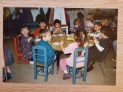 Another hung on to presumed special privileges, like wanting to sit on my lap during story-time or stripping down to her undershirt like she would at home to avoid getting hot during our Mousercizing exercise time!
 The last one was friendly, funny, always content to play and learn despite the fact unbeknownst to teacher/mom that she really needed glasses to see!



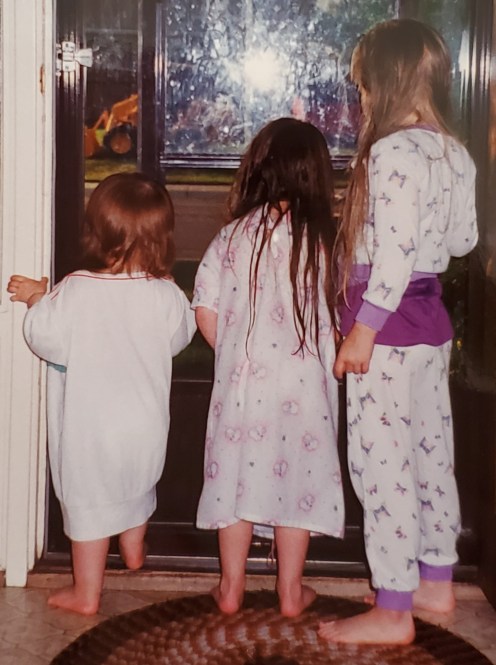

 As children grow up and experience life most parents observe that a son or daughter has a tendency towards being a leader or a follower. They can actually be a mixture of both and these traits are influenced by both genetics and the environment. Experts advice parents to not be judgmental towards either personality style because we need both leaders and followers in our families, schools, workplaces and communities.
 Embracing the team ethic of working together is very important. Yet, at the same time paying attention, assessing the situation, thinking for themselves and communicating when a poor choice is being made is necessary and shows emerging independent critical thinking skills.





 Beanie Babies were the new craze that year, but our kids had their eyes set on climbing the swimming ladder of success via buoyant animals like otters, seals and dolphins.
 And then you sit and wait. No scrolling through your phone! What phone! The World Wide Web has only just released browsers making the internet accessible at home on your computer if you have one. Instead you read your paperback, babysit siblings, strike up a conversation with the parent next to you, or maybe just enjoy watching your little ones swimming, splashing and diving. Then like a machine your wash, rinse, dry and repeat cycle continues.


 A quick READ.
 We had our favorite spots for summertime play. I had just unveiled my own frightening retro 80’s curly hair perm.
 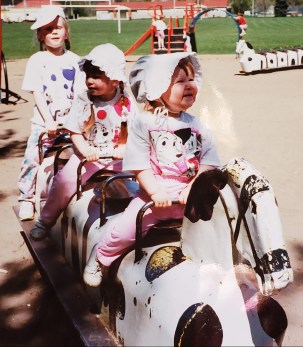 Climbing on monkey bars and jungle gyms, building castles in the sand, sliding down long, hot, slippery slides and riding the old rocking horses.



 Most parents know and accept that they are going to be given the responsibility and lead role regarding their children’s health and well-being. They enroll their kids in good schools. Love and care for them. Give them a variety of experiences. Sign them up for sports activities. Provide them with medical, dental and vision care. Save for their future perhaps post-secondary education. Perhaps spend a fortune on braces and a litany of other things. Read together. Give them hugs and jump through hoops for them.

 Children who have been through life-changing events or are grieving a loss have a greater risk for mental illness. It is not a stretch to predict that many immigrant or refugee children entering our school systems are struggling to fit into an unfamiliar sometimes not very accepting new culture. They are learning a new language and some may have come from traumatic environments. At the same time they are missing their home, family, friends and everything that was familiar to them. This surely is a recipe for stress that may challenge their self-esteem, resilence and positive thinking.
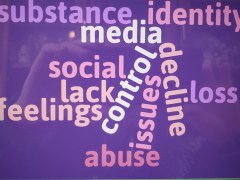 When children or adolescents are feeling that they are not fitting in or if they have become a victim of bullying or cyberbullying this can create an overwhelming cycle of self-doubt and despair.
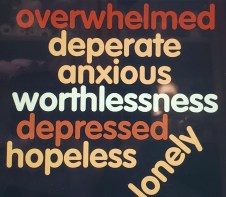 So, what can parents do if they believe that their child is suffering from serious mental distress, pain and unhappiness that could lead to self-harm? Immediatley seek out help from mental health professionals who can assess the immediacy of the danger risk for their son or daughter. Doctors and counsellors can take action and provide the appropriate intervention. A longer-term treatment plan can be initiated that will likely include medication and therapy.
 Uncovering and understanding the factors that are causing a child or adolescent to have such deep dark feelings and potential suicidal thoughts and behaviors is crucial. Resolving issues and helping them to regain a more positive perspective on life along with strengthening their resiliency and coping skills is the goal of any intervention.
 Ultimately a child needs to feel loved, understood, supported, appreciated and valued.
  We don’t have a crystal ball and can’t possibly predict all that may happen in our children’s lives. By helping them to identify and express their feelings from a young age we can reduce the risk that deep dark feelings may persist and lead to mental health problems. Children need to experience coping with stress and conflict in life so that they can learn from these situations how to communicate what they are feeling to others and become more resilient.








 Hindsight is Always 20/20! Parenting tips.