


I recently found some concerning words written in an old nineteen-ninety something journal of mine. One of my daughters had said to me “Something is bothering me, Mom. You haven’t been listening to me lately.” Ouch that still hurts today! “You haven’t been paying attention to me. That’s why I act silly.” The amazingly accurate insights of a four-year-old bring back the reality of those busy, overworked and challenging days of motherhood. The importance of the message my daughter was trying to communicate to me all those years ago still sometimes rings true today. We are all guilty of it. We spend time together with loved ones but are we really listening to what they need? I can’t change the past but looking back in life I see now that maybe I could have been a better listener.
If you have ever felt overwhelmed, a big hug can go a long way. Calm words of support may help but finding a compassionate listening ear will likely be the best thing for you at that moment. Parents should always encourage their sons or daughters to keep talking. Mental distress is quite normal at any age. It signals that you need to prepare or adapt so you can remain resilient. We know that mental health is influenced by thoughts and feelings about life and your ability to cope with everyday stressors. Caring adults can help children with their mental distress by just being good listeners.
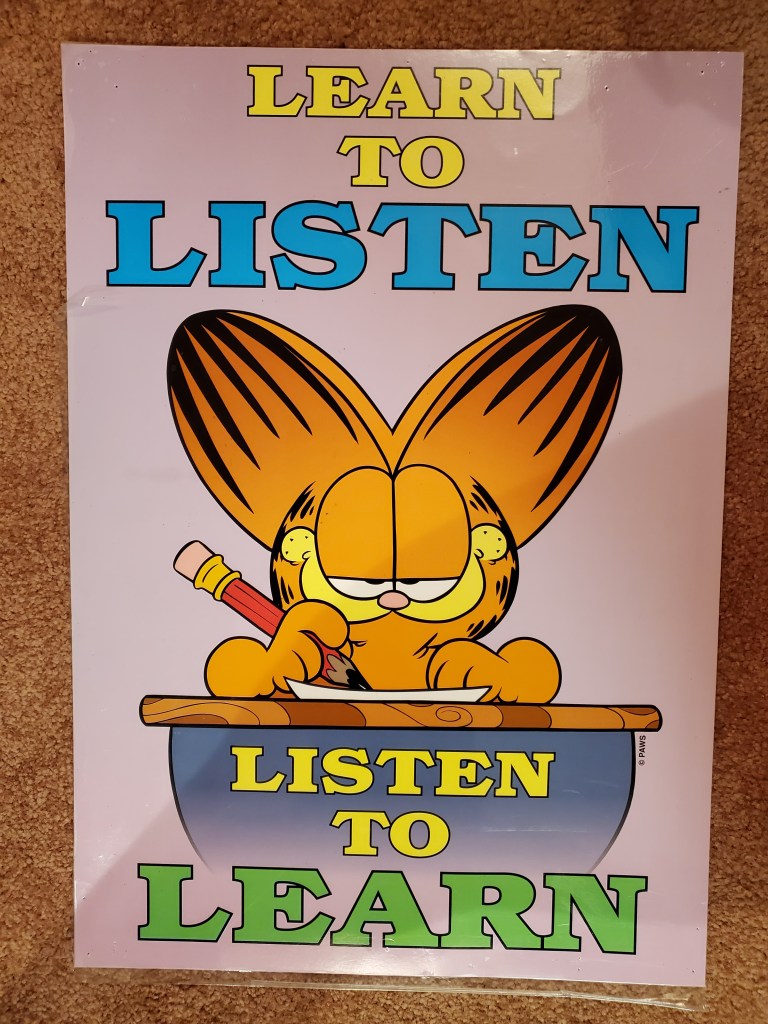
A prominent poster that hung in my classroom when I was teaching wisely said “Learn to Listen. Listen to Learn.” I have been listening to learn but what else have I been learning about myself? I’ve discovered with regret that listening isn’t always my strong suit. In retirement I have had the opportunity to do much more listening. Conversations with family and friends have increased. I’m tuning into newscasts, podcasts, talk radio, zoom meetings, visits and games. Church services have been on YouTube, and I recently listened to a favorite artist performing via online streaming. As we slowly come out of unsafe, anxious and isolating pandemic times I know that I have used my listening skills to stay connected.
I could blame my profession as a teacher where I had to talk all day long to make a living but that would be an excuse for a bad habit. The expectations for being a good listener as a parent, a friend or a significant other should be quite different especially when mental health is the focus. It’s not that I haven’t understood or felt empathetic. I do have a big heart, but the reality is that sometimes I don’t set a good example for being a truly “good listener”. I simply talk too much. I’m a champion interrupter that frequently doesn’t give others enough time to communicate their ideas, thoughts, or feelings thoroughly. Now I understand that sometimes when the other person’s feelings are speaking loud and clear through their words, you really need to sit back, be quiet and just listen. You don’t need to add your own words of wisdom. You can’t always make things better. There won’t necessarily be the right thing to say. Sometimes saying little speaks volumes.
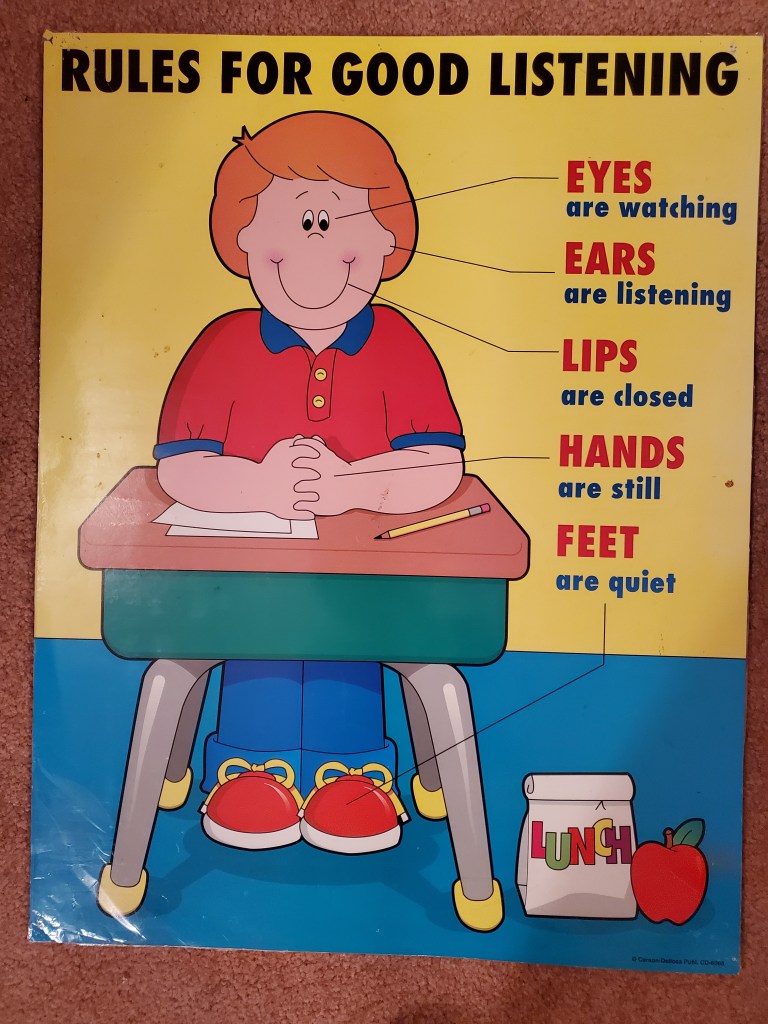
Whenever another incident or story hits the news cycle that has a direct connection to mental illness, I am reminded of what we can all do for those suffering from mental health issues and that is to bone up on our listening skills. It’s a good start that will mean so much. When I was in the classroom, I believed that we should be teaching kids how to listen. I noticed that poor listening skills consistently affected student learning, communication, behavior and overall school performance and success. We spend more time listening than any other form of communication.
Professionals agree that active listening can assist someone in distress. You can gain accurate and pertinent information. You can learn about and begin to understand the issues so you can initiate support. We hear with our ears, but we listen with our brain. Here are some tips that may help, and I am trying to use them more consistently myself.
- Always set the stage and recognize the purpose for listening so you can activate your background knowledge. It will focus your attention and get you thinking.
- Having a good relationship will encourage the person that is sharing with you and promote further conversations.
- People feel valued when they can see that you are listening. Try to maintain eye contact and watch for other silent communications, emotional cues, gestures and signs.
- Listening comprehension is the goal but don’t interrupt the speaker. Listen to the ideas, not just the words and try to picture what is being said in your own mind. It takes concentration and practice to be a good listener. Don’t try to guess where the line of communication is heading by responding or attempting to finish a sentence before the speaker has a chance to complete their chain of thoughts. Wow, that sounds like me! It doesn’t foster effective communication. If you want someone to share and talk about their personal concerns or possibly their mental health problems, they deserve your courtesy and respect. Just sit back and listen.
- Be attentive and invested in the moment. Don’t allow yourself to hear but not really understand. When the time is right, ask questions. Visualizing helps with making connections and building meaning. Restating the information conveyed increases your accountability and gives you the opportunity to clarify and reflect upon what has been communicated to you. Repeating the main ideas of the message back to the speaker in your own words will take you out of the passive listening mode that we are all guilty of falling into.
- Checking for understanding will show your interest, connection and empathy. Understanding the whole meaning of the message conveyed including the emotional innuendos and then relating to it in some way is important. It turns out that listeners and readers use similar thought processes when receiving information so they can construct meaning from words. A similar process of recalling, retelling and reflecting is used to increase reading comprehension.
So much of our listening is done via audio podcasts, broadcasts and social messaging on our phones and other devices making this process challenging and difficult to practice. Yet so many people need to be heard face to face. No wonder mental health issues have risen to epidemic rates. Active listening requires giving your full and sustained attention to the speaker. Help almost always starts with listening followed by conversations and reinforcement. Problem solving may not come at that moment, but the important thing is that you were there for someone.

My children are adults now, but the bottom line remains the same. Parents need to be good communicators and that includes listening. If your child grows quiet, that’s when you really need to listen. Someone you love may be in need. Words may not express their emotions but the silence does so you must listen with your heart and seek out that connection again. When we try to help anyone through their difficult times whatever the nature of the problem experts agree that active listening is an important way to encourage and bring about change. Instead we quickly take action as a response not realizing that just sitting back and listening is valuable.
Listening with my heart and mind to the people and cues around me has been an integral and reliable way that I have been able to sustain myself both mentally and physically, especially when facing difficult times in my life. It has helped me to be strong when necessary and hopefully a better person. Always choose wisely what you listen to so that you can gather accurate, trustworthy an relevant information, understand the issues, be prepared and stay connected. The current unprecedented situation worldwide combined with the many stressors life can send our way has once again brought the importance of mental health and wellness into the limelight.

Yes, it’s time that we all try to be better listeners to make more sense of the people around us and the world we live in. We could learn. We could understand. Then we could do more. Your children won’t expect you to fix everything in their lives but hopefully they will always want you to listen to them. If you are aware of what they are going through and the situations that they are facing you can offer support. It will make them feel that you are with them and willing to share your strength. Having that secure connection with your children will help them to become more resilient, responsible and caring people themselves that value your guidance and love for a lifetime. Perhaps your wisdom will be welcomed and shared but, in the meantime, active listening will be one of the most important skills that you can have in your parenting toolbox. Learn to listen. Listen to learn.
Thank you for joining me.
Karen Boschee
Retired Teacher and Parent of 3 adult children

Additional reading suggestions: The Skill of Listening. https://centerforparentingeducation.org/library-of-articles/healthy-communication/the-skill-of-listening/
Tips & Activities to Improve Your Child’s Active Listening Skills. https://www.oxfordlearning.com/category/early-learning/
 Hindsight is Always 20/20! Parenting tips.